

What is it?
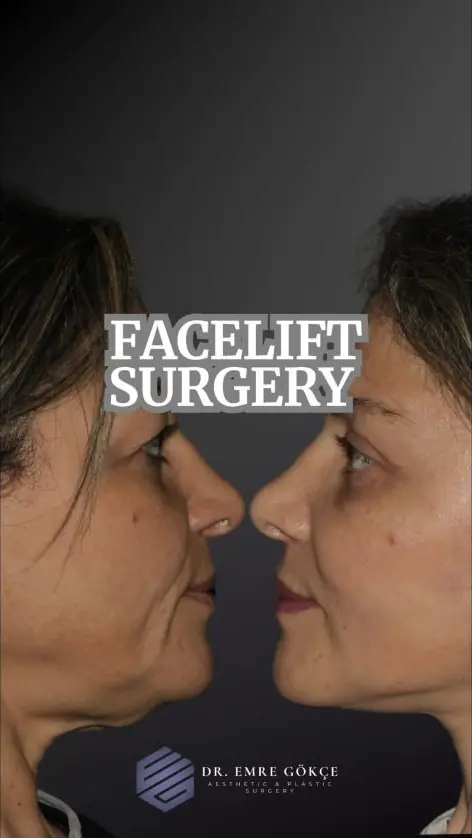
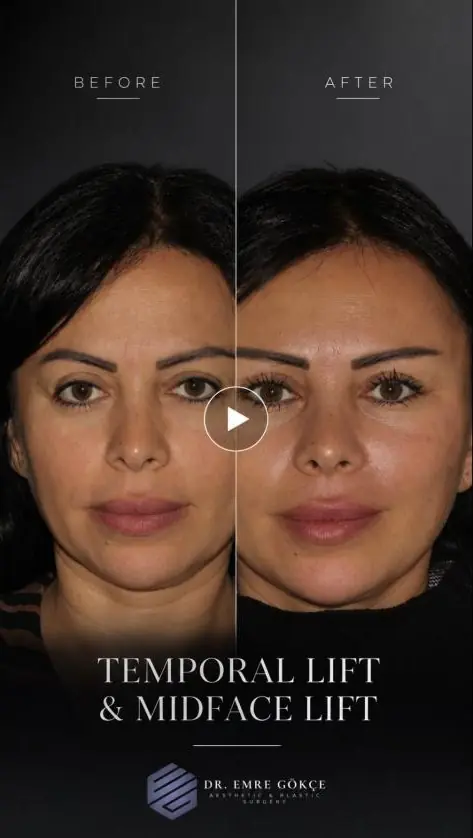
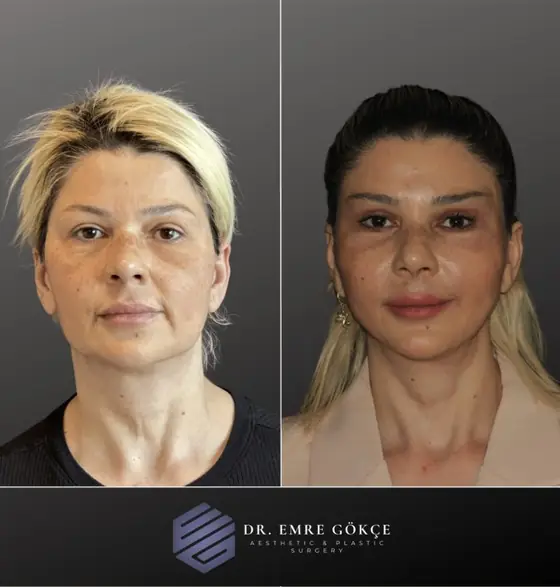
With age, the supporting tissues of the face loosen: the cheeks descend, the jawline blurs and the neck begins to sag. A facelift aims to reverse these changes.
In a modern facelift the skin is not simply pulled; the main correction is made in the deeper layer beneath it (the SMAS). Because the skin is not under tension, the result looks natural and scars heal better.
Who is it for?
- People with descended cheeks and deepening nasolabial folds
- People with a blurred jawline and jowls
- People with neck sagging and visible bands
- People who have not achieved enough with non-surgical treatments
- People in good general health who do not smoke or can stop
How is it performed?
SMAS facelift
The muscle-fascia layer beneath the skin is repositioned, and excess skin is removed without tension.
Deep plane facelift
In suitable patients, the ligaments beneath the SMAS are released so the cheek and jawline are lifted together, giving a more pronounced result, especially in the midface.
Incisions
Planned in front of and behind the ear and along the hairline, hidden in natural creases.
Combinations
Can be planned together with a neck lift, temporal lift, eyelid surgery and facial fat grafting.
Preparing for surgery
- If you have high blood pressure, it is important to have it controlled before surgery; this reduces the risk of bleeding.
- Stop smoking at least 3–4 weeks before surgery; nicotine impairs wound healing and blood supply to the tissues.
- When to stop aspirin, blood thinners, fish oil, vitamin E and certain herbal supplements will be planned individually for you.
- You will need to avoid eating and drinking for 6–8 hours before surgery.
- Arrange for someone to take you home on the day of surgery and stay with you on the first night.
Recovery
- Days 1–2Facial dressing, drain if needed; rest with head elevated
- Days 7–10Stitches removed
- Weeks 2–3Bruising and swelling largely resolve; back to social life
- Week 6Gradual return to exercise
- Months 3–6Swelling and numbness resolve; final result
Durations are averages and vary from person to person.
Take your follow-up photos the standard way
The photo guide shows an outline for each angle on your phone camera. Photos stay on your phone; you send them by e-mail or Instagram yourself.
Risks and safety
Specific to facelift, haematoma (a collection of blood under the skin), temporary numbness around the ears and, rarely, temporary weakness of facial nerve branches may occur. Skin circulation problems are markedly higher in smokers.
As with any surgical procedure, there are risks of bleeding, infection, scarring, delayed wound healing, asymmetry and risks related to anaesthesia. These are discussed with you in detail during your consultation and are minimised through careful patient selection, meticulous surgical technique and regular follow-up.
Frequently asked questions
Will I look pulled or artificial?
When the deep tissues are repositioned and the skin is not placed under tension, the face looks rested rather than pulled.
How long does it last?
A facelift turns back the clock but does not stop it. Results usually last many years; skincare, stable weight and sun protection help maintain them.
Will the scars be visible?
Incisions are hidden in the crease in front of the ear, behind the ear and along the hairline; once well healed they are hard to notice unless viewed closely.
What is the right age?
The degree of sagging matters more than age. In earlier stages, more limited procedures may be enough.
The information on this page is for general guidance and does not replace a consultation. The right method, surgical plan and expected result can only be determined in an in-person examination.
Last updated: November 2026